AI Will Look Different in Six Months, Not Six Years: And That's Kinda Scary
September 11, 2026
Everyone keeps talking about what AI can do. I think the bigger story is how quickly the answer to that question keeps changing.
I use these tools a lot, and even I find myself changing my opinion constantly. Something I thought was impressive six months ago now feels pretty basic. A workflow I would have recommended three months ago may not be the one I would recommend today. I used to take pictures of my screen when I was building a CRMA recipe and paste it into chat as I went along. Now, I could have just had Claude in Chrome evaluate my structure in real time. A tool that used to be great for one specific thing suddenly adds a feature that makes it useful for five more.
That is the part of AI that I don't think we're fully appreciating yet.
We aren't just watching the technology improve. We're watching the pace of the improvement speed up. It’s honestly kind of frightening and the anxiety of staying up to date keeps me up sometimes.
In a very short period of time, we've moved from mostly asking AI questions to setting up agents to do the work for us. It can research something, work through files, write code, build things, use a browser, create presentations, analyze data and increasingly work across the software we already use every day.
And every time one company releases something new, another one seems to follow right behind it.
The individual releases are interesting. The pace is more interesting.
I keep thinking about the iPhone
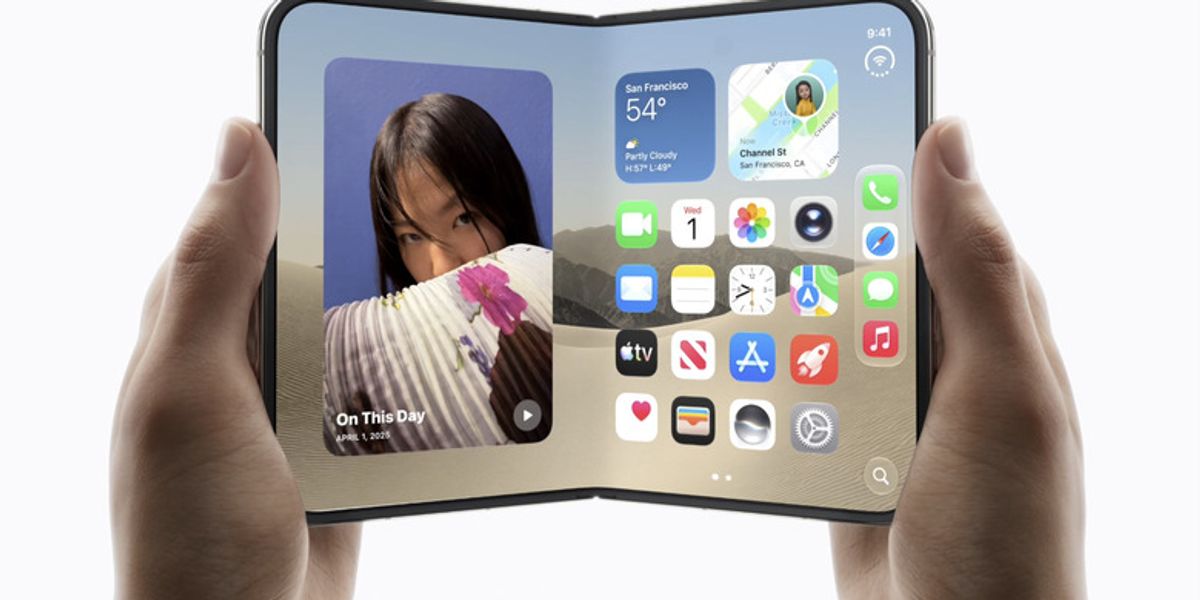
The iPhone is probably the closest comparison I can think of because it completely changed how we live.
It changed photography, shopping, banking, travel, dating, navigation, advertising, communication and eventually how companies operated. Entire businesses were built because smartphones existed.
But it happened gradually.
We got a new iPhone every year. The camera improved. The processor got faster. Apps got better. Companies started building mobile sites. Then apps. Then mobile-first businesses.
It was a massive shift, but we had time to absorb it.
AI doesn't feel like that.
A meaningful change doesn't necessarily happen once a year. It can happen next month. Or next week.
And these aren't always small upgrades. Sometimes the entire way you approach a task changes.
6 months ago, you might have needed to use one AI tool to research something, another program to organize it, another tool to make the presentation and then manually move everything between them.
Now more of that can happen in one place. (Hi Claude!)
A year ago, someone might have told you that you needed to learn how to code to build something. Now you can explain what you want, converse with AI, strategize on your options, and point it in the direction you need it to go.
That doesn't mean the results are always perfect. They aren't. But the direction is pretty clear.
I don't think you can actually "learn AI"
I hear people say this all the time: "I need to learn AI."
I get what they mean, but I don't think that's really the goal anymore.
You can learn Excel. You can learn Salesforce. You can learn PowerPoint. Of course those products change, but the basic knowledge you build carries forward for years.
AI is different because the thing you're learning keeps changing.
You can take a course today, become really good at a certain workflow and then discover six months from now that there's a completely easier way to do it (I’m obsessed with Claude skills and projects for this reason).
That can feel frustrating, especially for people who already feel like they're behind.
But I actually think it's the opposite.
It means you don't need to know everything.
Nobody does
The people who are going to be good at this aren't necessarily the people who memorized the most prompts or became experts in one specific tool. They're going to be the people who are comfortable experimenting.
Try it. See what works. Understand what doesn't. Use it where it makes sense. Then be willing to change how you're doing it when the technology changes.
That is a very different skill than mastering software. I would know, I’m literally studying for my Salesforce Admin License now and I feel like I’m back in college.
Businesses need to think differently about this too
This is also why I get a little nervous when I hear companies talking about building multi-year AI roadmaps.
I'm not saying companies shouldn't have an AI strategy. They absolutely should.
They should be thinking about security, data, governance, training, access and where AI can actually make work better. They should understand where employees are already using it, because chances are they already are (and probably dumping in confidential company data while they’re at it).
But I would be careful about building a strategy around exactly what the technology looks like today.
The tools will change. The pricing will change. The integrations will change. The companies leading certain categories may change.
Things that require complicated implementations today may eventually become a standard feature inside software you already pay for.
That's why I think the better strategy is building a company that knows how to adapt.
Give people enough room to experiment. Put smart guardrails around it. Find the employees who naturally gravitate toward these tools and let them test things. Share what's working. Stop doing things that aren't. Reevaluate often.
Most importantly, don't become so attached to the process you built six months ago that you miss the better way to do it today.
I've spent a lot of my career working on systems, processes and technology. Normally, the goal is to build something that lasts.
With AI, I think we're going to have to get much more comfortable building something that works for now.
That's a pretty big mindset change.
Six months is the interesting timeframe
People love asking what AI will mean five or ten years from now.
I have no idea.
I'm not sure anyone really does. Is Optimus going to just take over everything that requires human brain power? Will we wake up like Luke Wilson in Idiocracy? iykyk
There will be things that are overhyped. There will be tools that disappear. There will be plenty of AI products that aren't nearly as useful as they claim to be. And there are very real questions around privacy, security, jobs and how much autonomy we actually want to give these systems.
But none of that changes what is happening right in front of us.
The capability is improving quickly, and the time between meaningful changes keeps getting shorter.
That's why I'm much more interested in what the world looks like six months from now than six years from now.
Think about where these tools were six months ago. Then think about what you're able to do with them today.
Now do that again.
And again.
That's the part that is hard to wrap your head around.
Everyone is focused on what AI can do today.
I'm increasingly focused on how quickly today's version becomes outdated.
Buckle up, buttercup
More like this, weekly.
One email a week on operations, systems and where AI actually helps.